Easter in Florence is unique! Planning a trip to Florence for Easter weekend means preparing to witness an event that literally stops the city in its tracks. Rooted in a past of knights, crusades, and ancient symbols, the Scoppio del Carro (Explosion of the Cart) is the most important traditional event in the Florentine calendar.
Table of Contents
Easter in Florence: Understanding the “SCOPPIO DEL CARRO”
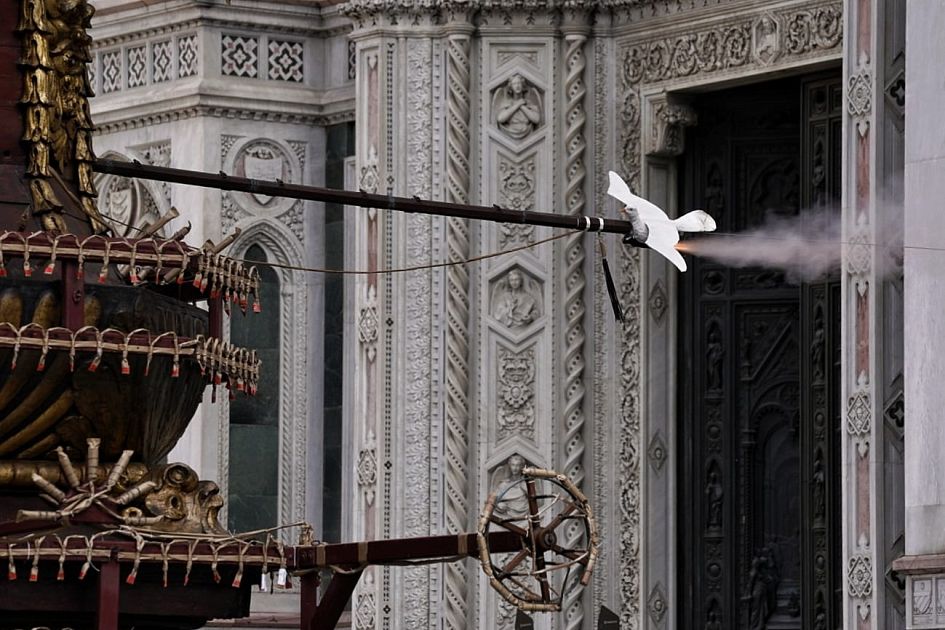
But what exactly is it? Imagine a massive wooden tower, intricately decorated and standing three stories high, being pulled through the historic streets by white oxen. This cart is actually a complex pyrotechnic machine: hundreds of fireworks, crackers, and pinwheels are positioned inside and along its walls. The “explosion” is the moment this structure comes to life in a triumph of smoke, color, and thunderous noise. It is a deeply symbolic act where the roar of the fireworks represents the victory of light over darkness and the joy of the Resurrection spreading throughout the city.
The history of the “NEW FIRE” and Pazzino de’ Pazzi
The origin of this custom dates back to 1099, during the Siege of Jerusalem in the First Crusade. Legend has it that Godfrey of Bouillon, commander of the crusading troops, promised a reward to whoever was first to scale the walls of the holy city. It was the Florentine nobleman Pazzino de’ Pazzi who accomplished the feat, becoming the first to climb the walls and raise the Christian flag.
As a sign of admiration for his bravery, Godfrey of Bouillon gifted him three flint stones from the Holy Sepulchre. Upon his return to Florence, Pazzino initially kept the stones in his family palace before they were moved to the Church of Santi Apostoli, where they are still preserved today.
In ancient times, these very stones were used to strike a “New Fire” on Holy Saturday. The ritual dictated that this blessed fire be carried in procession through the streets, where Florentine families waited to light their own candles and domestic hearths. It was a rite of purification and rebirth. Over the centuries, this simple ceremony evolved into the spectacular event we see today, centered around the pyramidal cart that Florentines affectionately call the “Brindellone.”
Easter in Florence: The Ritual of The Colombina And the Omen
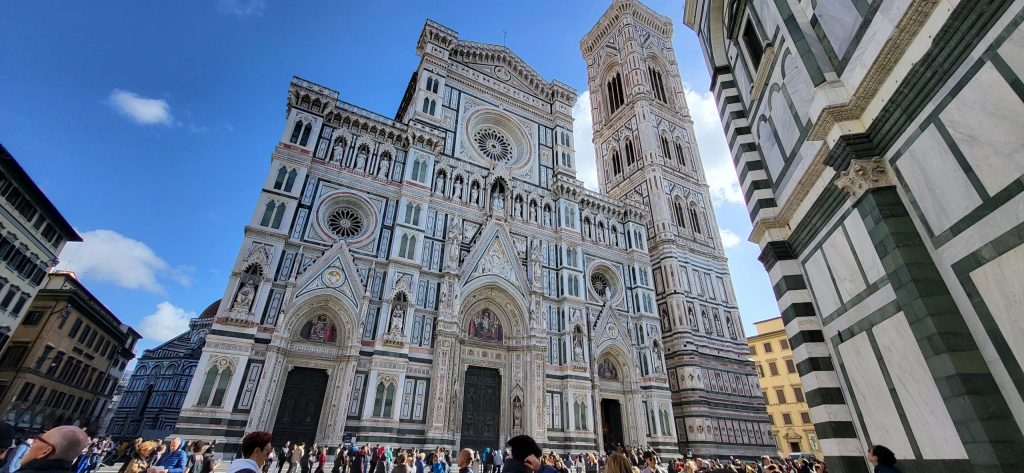
The climax of the event takes place on Easter Sunday, April 5th, 2026, around 11:00 AM. A dove-shaped rocket (the Colombina), carrying an olive branch in its beak, is launched from the high altar of the Cathedral. The Colombina slides along a mechanical wire that runs the entire length of the Cathedral’s nave, shoots outside, and strikes the cart, igniting the fireworks display.
There is a technical detail that every local watches with anxiety: after lighting the cart, the Colombina must slide back toward the altar along the same wire. A perfect return has been considered, since the time of the ancient farmers, a good omen for a bountiful harvest and good luck for the entire community for the year ahead.
Easter in Florence: practical information
The Cart arrives in Piazza del Duomo around 10:00 AM, escorted by the Historic Parade of the Florentine Republic. The actual explosion happens at 11:00 AM, coinciding with the singing of the Gloria during the Easter Mass.
To make the most of the event, keep these logistical tips in mind:
- Avoid driving at all costs: The historic center is pedestrianized, and the area around Piazza San Giovanni is under strict security restrictions.
- Use the Tramway: Lines T1 and T2 are the most convenient ways to reach the center. Get off at the “Valfonda” or “Unità” stops, just a 5-minute walk from the Cathedral.
- Timing is key: To see the cart and the flight of the Colombina, you need to be in the square between the Baptistery and the Cathedral by 9:00 AM at the latest, as the best spots fill up very quickly.
Easter in Florence beyond The duomo
Once the spectacle is over, the square slowly empties. To continue your day, I suggest visiting some key cultural sites that offer a quieter alternative to the holiday crowds:
- Church of Santi Apostoli: Located in the tiny Piazza del Limbo, this is where the stones gifted by Godfrey of Bouillon are kept. Visiting here allows you to see the historical heart of this secular tradition.
- Bargello National Museum: This is one of Florence’s hidden gems. It houses absolute masterpieces by Donatello, Michelangelo, and Verrocchio. Interestingly, it is far less crowded than the Uffizi or the Accademia, allowing for a much more enjoyable visit even during a busy holiday weekend.
- Palazzo Strozzi: Usually the home of major international exhibitions, it is the place to go if you are looking for a high-level modern or contemporary art experience. This year you will enjoy the exhibition dedicated to Mark Rothko.
Easter in Florence: it’s a wrap-up
Participating in the Scoppio del Carro allows you to experience a place that is not just a static museum, but a city that still lives its ancient rites with passion. It is an experience dense with history, perfect for those who want to discover the most authentic side of Tuscan traditions. If you wish to continue exploring the city at your own pace, looking for less crowded corners for the rest of the weekend, take a look at my Do-it-yourself Florence guide for further insights and unusual itineraries.