Tipping culture in Italy
Tipping in Italy has a more relaxed approach than in any other Country I have been to. In general, the whole experience at the restaurant is more relaxed here. You will never see people at the table taking out their phones (to use the calculator app) at the end of a meal. Once in an Italian restaurant, you will understand the reason why the check moment was actually my worst nightmare (LOL) when at a restaurant in the US.
We Italians are not used to rate a service with a percentage (10% – 15% – 20% ?) of our meal; nor we feel it is correct to tip more someone who works in a more expensive restaurant rather than a waiter who works in a cheaper restaurant, as the work they do is often the same -if not sometimes, the waiter at the cheaper place works even more than the other one.
Traveling to Italy is a dream for many, but navigating the local customs—especially around tipping—can be confusing for US and UK visitors. This guide will help you understand when, where, and how much to tip in Italy, so you can blend in like a local.
Table of Contents
1. Tipping in Italy: Restaurants
The Coperto (table set up charge)
Many Italian restaurants include a “coperto” (cover charge) on your bill. This is not a tip for the waiter but a fee that covers the table set up: tablecloth and napkins, cutlery and ceramic plates, bread or breadsticks, etc. It usually ranges from €1 to €4 per person.
The Servizio Incluso (service included)
Even if it is less and less common, some restaurants already calculate a percentage (generally 10%) over your total and include it in the bill as a service charge. In this case, the money goes to the waiters.
When to Tip Extra
As the tip is not compulsory in Italy, we like to tip if we feel that the service has been exceptional. A small note here for US travellers: service is not exceptional for us if the waiter checks on you every 10 seconds, as it usually happens in the US. To the contrary we consider that behaviour annoying and rude. In Italy, the waiters monitor tables without interrupting you all the time, and generally they won’t leave the check on your table, even if you finished your meal, unless you ask for it, because it would be considered rude otherwise.
So, to consider a service exceptional, just assess how the waiters make you feel, how helpful and nice they are, how smoothly the meal goes, and in case you get an exceptional service, you can leave a small tip—5-10% of the bill is generous, but not expected. Italians often simply round up the bill or leave the change.
How to Tip
- Cash is king: Even if you pay by card, leave the tip in cash.
- What to say: If you want to leave the change as a tip, say, “Il resto è per lei/te“ (“The change is for you”) or “tenga/tieni pure il resto” (you can keep the change).
2. Tipping in Italy: Cafés and Bars
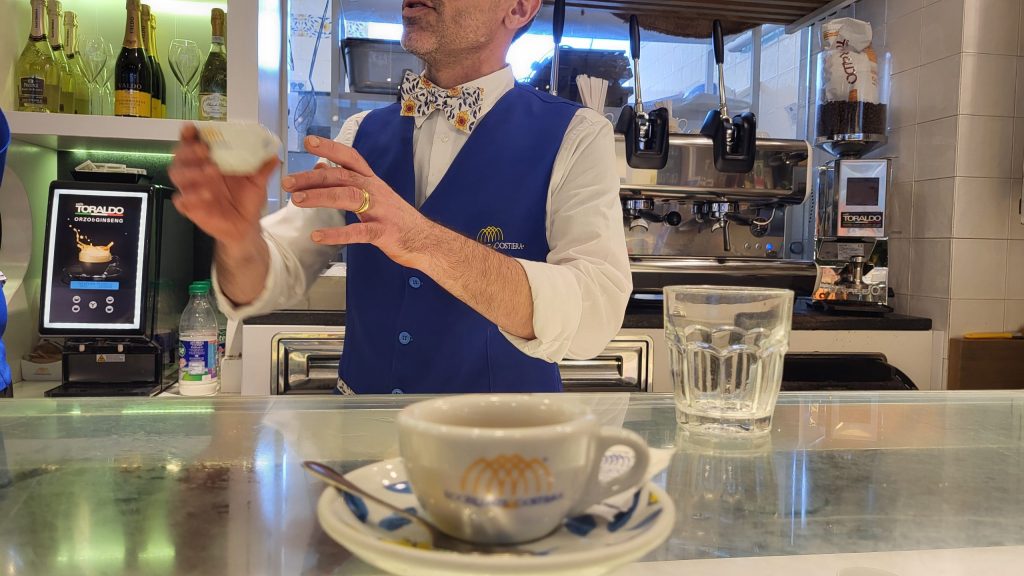
At the Counter
No tip is expected when ordering coffee or a drink at the bar.
At a Table
If you sit at a table, leaving €0.50–€1 or rounding up the check is polite, especially in tourist-heavy areas.
3. Tipping Taxi Drivers
Rounding Up
It’s common to round up to the nearest euro or leave €1–€2 for short rides. Tipping taxi drivers has never been standard in Italy, but it’s becoming more and more common (because of many American tourists doing it), so you will notice that taxi drivers expect it or they round the price up automatically.
4. Tipping in Italy: Hotel Staff
Porter/Bellhop
€1–€2 per bag is standard.
Housekeeping
It is not common, nor expected in 3 or 4-star hotels. If you wish, €1–€2 per day, left in the room at the end of your stay.
Concierge
Only tip if they provide exceptional service, such as securing hard-to-get reservations. €5–€10 is appropriate.
5. Tipping Tour Guides
Private Tours
Again, as a tour guide myself, I can say that tipping is not common. Check how much you paid for the service, as often, independent tour guides have a rate that is more than enough for their service. Tipping a tour guide is really to show appreciation for a very good, well-prepared professional (make sure that they have a valid licence to guide you). The normal tip rate is €5–€10 per person for a half-day tour; €10–€20 per person for a full day, for exceptional service.
Group Tours
€2–€5 per person, depending on the length and quality of the tour.
6. What NOT to Do
- Over-tipping if not deserved: Avoid leaving 15–20% like in the US, just because you are used to it—it’s unnecessary. Feel free to leave it if you want to praise the work of the professional.
- Tipping in Fast Food or Self-Service Places: It is not expected.
- Assuming Tips Are Included: Always check the bill for “servizio incluso”. Most of the time it is not, so if you feel you want to thank the person, do it. If it is included on the other side, you will avoid double-tipping.
7. Cultural Insights
Why Italians Don’t Tip Like Americans
Italians see tipping as a gesture of appreciation, not an obligation.
Politeness Over Money
Italians value politeness and respect over monetary tips. A simple “grazie” (thank you) goes a long way. But if you demanded a lot from your service provider or asked them to go out of their way to help you, then a tip is expected.
8. Practical Tips for Travellers
- Carry Small Change: Coins and small bills (€5–€10–€20 banknotes) are useful for tipping.
- Observe Locals: When in doubt, watch what Italians do in the same situation.
- No Pressure: Never feel obligated to tip—it’s always optional.
To summarize
Tipping in Italy is about appreciation, not obligation. By following these guidelines, you’ll avoid the “tourist tax” and enjoy your trip without stressing over tipping etiquette.
Remember, the goal is to respect local customs while showing gratitude for good service. Have you experienced tipping in Italy? Don’t forget to check out my city guides for more Italy travel tips.