The best beach in Italy Beyond The Postcard
There is a specific imagery associated with the Italian coast that has captured the global imagination: the dramatic cliffs of Amalfi, the cascading pastel houses of Positano, or the exclusive rocky terraces of Capri. While these iconic destinations deserve every bit of their fame, they represent only a single chapter of Italy’s deep relationship with the sea.
To discover where Italy keeps its heart in July, you must look where the locals go when the cities grow too warm. Far from the famous resort towns, you’ll find families setting up camp along windswept dunes and groups of friends resting beneath coastal pine canopies. Here lies the essence of villeggiatura—an authentic, unhurried way of life where time slowing down is the greatest luxury.
Unlocking the perfect beach in Italy isn’t just about finding a hidden coordinate; it’s about understanding the subtle, poetic rhythm of how Italians celebrate the sea.
Table of Contents
The Italian Beach Philosophy: A Different Kind of Wave
If you are used to the vast, wild, and active coastlines of Australia or the United States, stepping onto an Italian beach for the first time can be a beautiful culture shock.
In the US or Australia, beach culture often centers around conquering nature or staying active—think surfing, coastal hiking, beach volleyball, or taking your cooler full of beer and chips. In Italy, the beach is an open-air living room, a social club, and the real essence of “dolce vita”.
The Stabilimento vs. The Wild
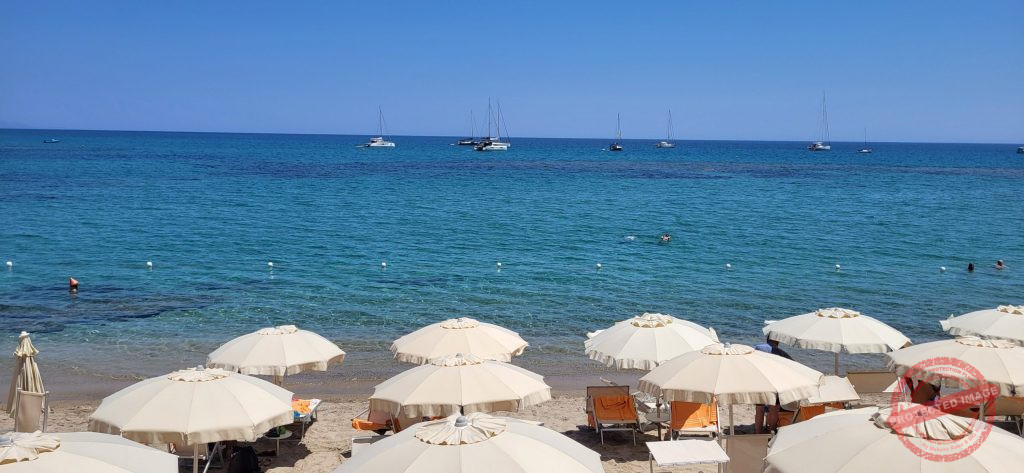
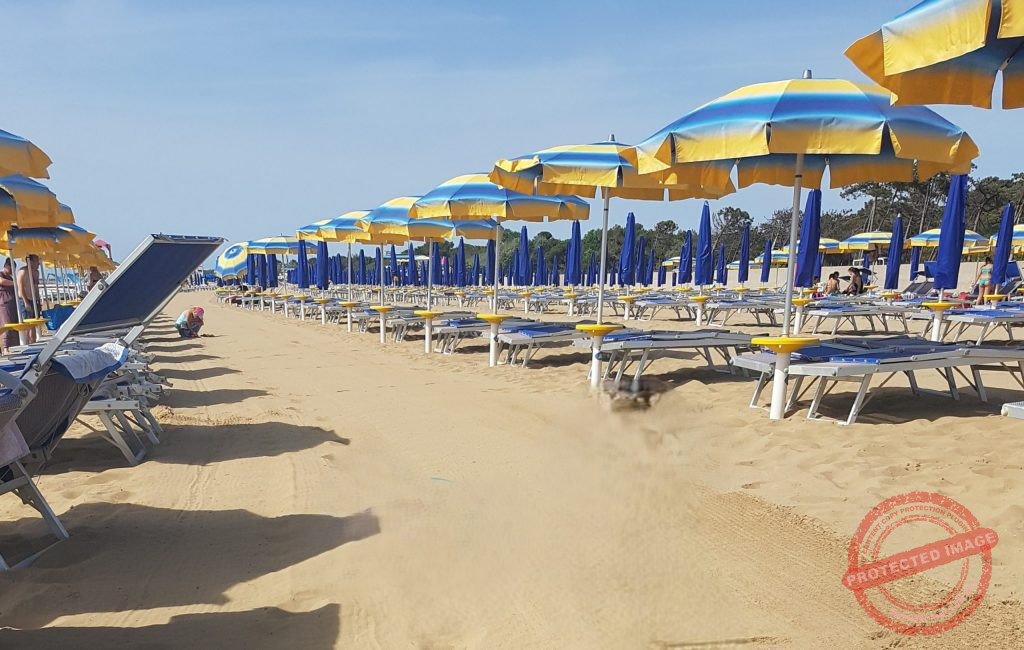
A huge part of finding a great beach in Italy means choosing between the spiaggia libera (free beach) and the stabilimento balneare o bagno (private beach club). To an outsider, rows of identical, geometrically aligned umbrellas (ombrelloni) might look restrictive. To an Italian, it is the peak of summer comfort.
You don’t just rent a sunlounger (lettini) and an umbrella; you gain access to hot showers, proper toilet and changing rooms. You will also enjoy a bar for your morning “cappuccino e croissant“, for your lunch with your feet in the sand and for your cool aperitivo. When you join a bagno, you join a community of locals who most probably have been renting the exact same spot every July for thirty years.
The Sacred Rituals
- The 1:00 PM Exodus: While an overseas traveler might grab a quick snack on the sand, Italians take lunch seriously. Traditionally, around midday, the shoreline empties; nowadays, in fact, it happens less and less and you might not notice it. But if you are lucky enough to witness this, you will see that everyone moves to the shaded terrace of the beach restaurant or unpacks a home-cooked pasta fredda (cold pasta).
- The Digestion Myth: The old Italian grandmother rule dictating a strict three-hour wait after eating to avoid congestione is still widely practiced, even if it’s not an absolute law as it used to be.
- La Passeggiata: As the sun dips and the heat softens, the real action begins. No power-walking or jogging—just a slow stroll along the shoreline in couples or with friends, chatting, observing, and working up an appetite for a chilled aperitivo.
Now that you know how to blend in, let’s look at the secret coastlines where you can practice these rituals far away from the tourist crowds.
1. Upper Coasts: Maritime Pines, Surf Swells, Secret Coves and Golden Sandbars
The upper northwestern curves of Italy is all about distinct micro-cultures, while on the flip side of the boot, the Adriatic is a landscape of infinite horizons.
Liguria: San Fruttuoso, Levanto and Sestri Levante
Liguria’s coastline is notoriously vertical, but if you look past the crowded paths of the Cinque Terre, you find its true secrets. If you want high drama, take a ferry or a steep, pine-shaded trail from Camogli down to San Fruttuoso. Here, a medieval abbey sits directly on a tiny pebble beach, its stone arches practically dipping into the turquoise water.
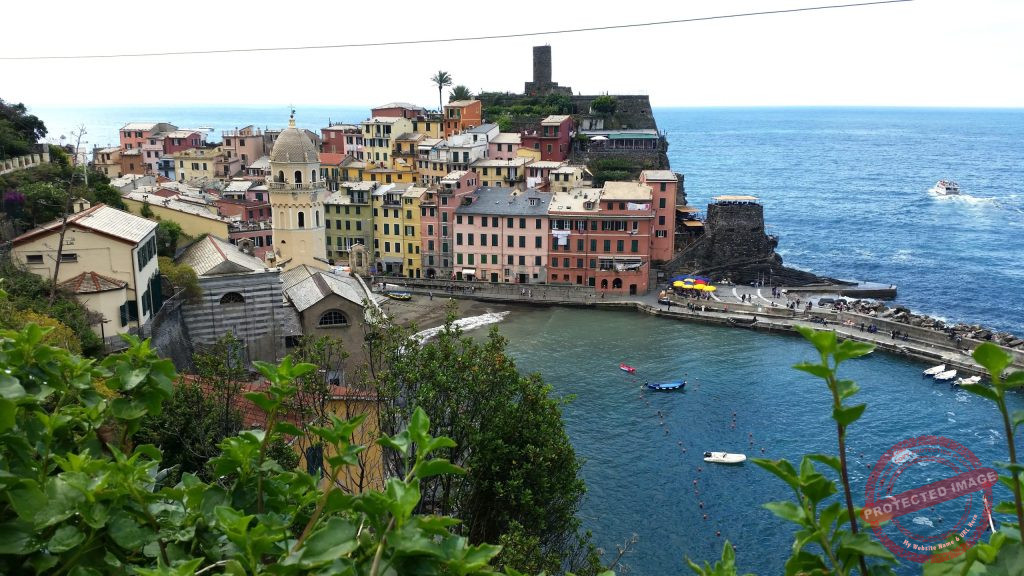
If you prefer a surfboard over a sunbed, head to Levanto. Known as the surf capital of the Italian mainland, it’s a vibrant, colorful town backed by forested hills where heavy swells roll onto a spacious sandy shore.
Just a short hop away lies Sestri Levante, famous for its magical, cozy beach: a flawless, romantic crescent of sand framed by traditional Ligurian houses, where the water is almost always as still as a lake. It was an important leg of the Italian Grand Tour for poets and writers during the nineteenth century. It was a poet, Giovanni Descalzo, who first gave the bay its current name: Baia del Silenzio (Bay of Silence).
Friuli Venezia Giulia: Lignano Sabbiadoro
Lignano Sabbiadoro (“Golden Sand”) boasts an 8-kilometer stretch of soft, ochre sand that is a paradise for multi-generational families.
Veneto: Bibione and Caorle
Right next door, Bibione pairs its pristine eco-beaches with mineral-rich thermal springs (Bibione Thermae) tucked right into the coastal woods.
If you want a beach with a soul, head to Caorle. Unlike the purpose-built modern resorts, Caorle is an ancient fishing village with a historic center filled with pastel-colored Venetian houses and a majestic cylindrical bell tower.
Emilia Romagna: Cervia and Lido di Savio
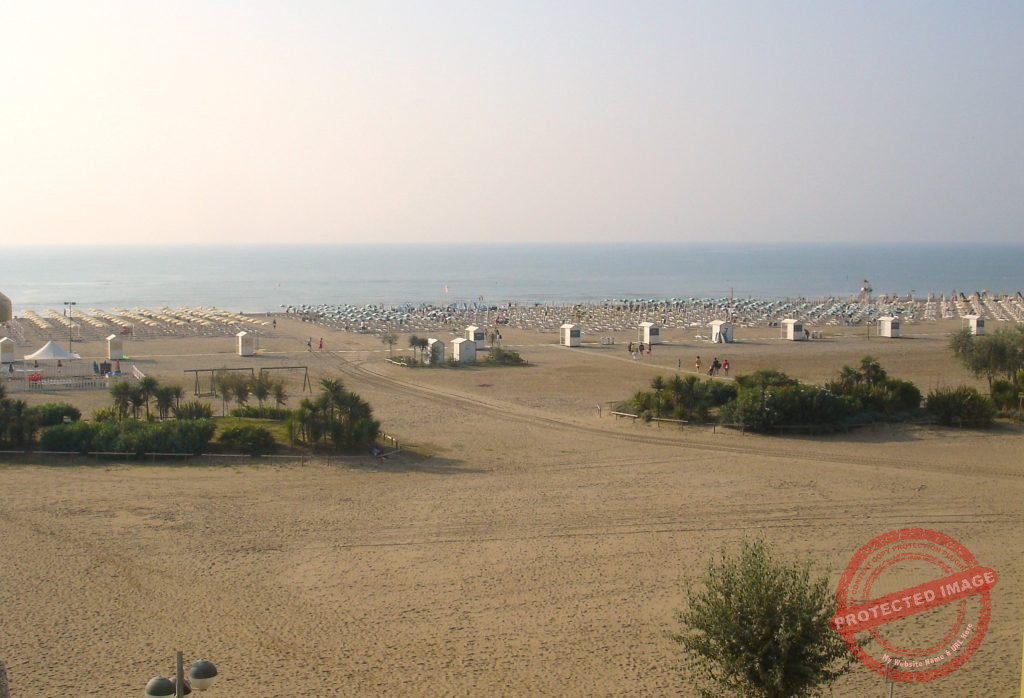
Moving south, Emilia-Romagna masterfully blends organized comfort with unexpected nature. Cervia offers kilometers of safe, wide sands bordered by a centuries-old pine forest, famous for its historic salt pans.
Want to strip away the infrastructure completely? Drive down to Lido di Savio in Emilia-Romagna. Walk to its southern tip where the river meets the sea, and you’ll walk right into the Pineta di Classe—a completely wild, untouched dune system where the only sounds are the cicadas and the waves.
2. The Mid-Adriatic Escapes: From Velvet Sands to Wild Fishing Platforms
Moving down the eastern calf of the boot, the coastline of Le Marche and Abruzzo shifts dramatically, offering an incredible contrast between sophisticated culinary towns and raw, untouched nature.
Le Marche: Senigallia
Senigallia is legendary for its Spiaggia di Velluto (Velvet Beach). The sand here is so impossibly fine and silk-like that it legitimately feels soft beneath your feet. Anchored by the elegant 1930s Rotonda a Mare pier, this town is a major local culinary hub, where you can pair a relaxed day of sunbathing with world-class, Michelin-starred seafood just steps from the shoreline.
Abruzzo: The Trabocchi Coast and Punta Aderci
As you cross into Abruzzo, beach life sheds the commercial layout entirely and shifts into a rugged, poetic landscape. The coastline here is defined by the trabocchi—genius, ancient wooden fishing platforms suspended on stilts that look like giant spiders walking out into the sea. At the Riserva Naturale di Punta Aderci, you won’t find rows of plastic loungers. Instead, it is a sanctuary of smooth pebbles, high clay cliffs, and long wooden piers where you can dine on fresh seafood catch directly over the breaking waves.
3. The Central Tyrrhenian: Maremma Wilds and Roman Dunes
Across the peninsula on the western coast, history blends into sweeping natural reserves and sophisticated local getaways.
Tuscany: Golfo di Baratti and Cala Violina
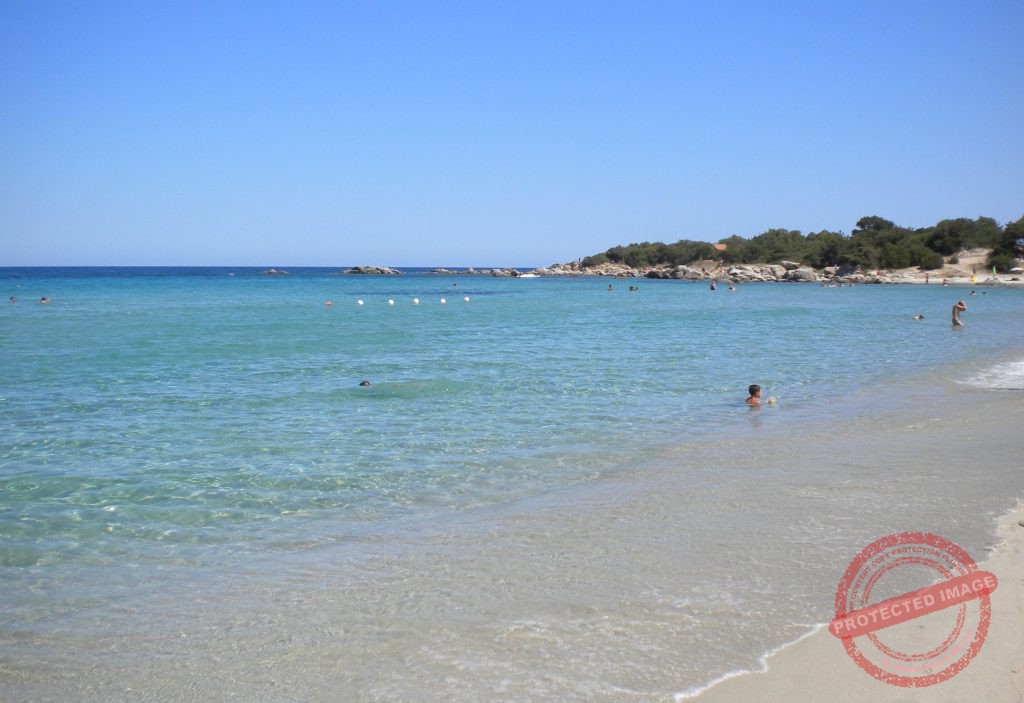
Tuscany isn’t just rolling hills and vineyards; its coastline is spectacular. For an insider experience, skip the high-end resort towns and head to the Golfo di Baratti. This sheltered, crescent-shaped bay features rich, dark sand shaded by ancient, twisted stone pines, all sitting right below the historic Etruscan ruins of Populonia.
If you are up for a hike, book an entry ticket to Cala Violina in the Bandite di Scarlino reserve. It’s a flawless half-moon of white sand bordered by thick oak forests, named because the quartz sand makes a subtle violin-like sound when you walk across it.
Lazio: Sabaudia and Monte Circeo
When Rome bakes in August, the Romani drive an hour and a half south to Sabaudia. Framed by the dramatic, jagged silhouette of Monte Circeo (the mythical home of the sorceress Circe), Sabaudia offers kilometers of wide, golden sand dunes. It’s a striking, windswept landscape where high-end local seafood shacks (chioschi) hide just behind the wild Mediterranean brush.
4. The Deep South: Deep Blue and Wild Frontiers
Down at the tip of the boot, the sun gets hotter, the colors get deeper, and the crowds fade away into rugged cliffs and pristine shingle.
Puglia: Vieste and Gallipoli
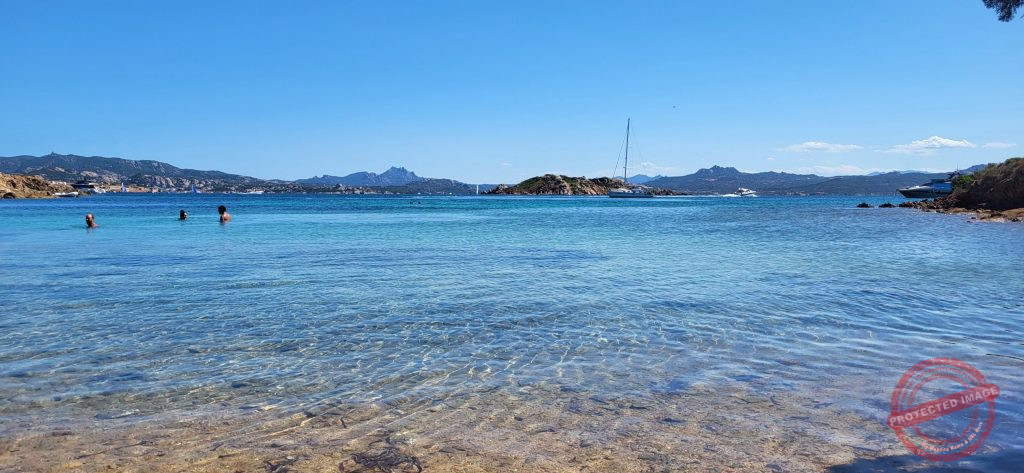
Puglia gives you two completely different coastal worlds. In the north, on the rugged Gargano spur, Vieste features dazzling white limestone cliffs and the famous 25-meter-high Pizzomunno monolith rising straight out of the sand.
Down in the deep south, the Ionian coast near Gallipoli transitions into near-neon emerald water. Skip the busy town tracks and walk through the pine and wild rosemary paths to Punta della Suina, a gorgeous stretch of low rocks and shallow sand pools.
Calabria: Spiaggia di Michelino and Roccella Ionica
Calabria is Italy’s wild frontier. On the Tyrrhenian side, tucked away near Tropea, lies the hidden Spiaggia di Michelino in Parghelia. Unknown to most international tourists, this secret pocket of paradise is reached only via a steep flight of steps carved into the cliffside. Your reward is a breathtaking setup of golden sand, dramatic rock formations rising from the water, and a crystalline sea perfect for snorkeling among wild fish.
On the quiet Ionian side, Roccella Ionica sits on the Costa dei Gelsomini (Jasmine Coast). Crowned by a massive medieval castle on a hilltop ridge, this beach is famous for kilometers of immaculate, crowd-free light shingle and a deep cobalt blue sea.
5. The Cinematic Crossroad: Sicily’s Storied Shores
Sicily weaves cinema, ancient history, and sweeping landscapes directly into its coastal sand, making it a distinct universe of its own.
Cefalù, Scala dei Turchi (Realmonte) and Sciacca
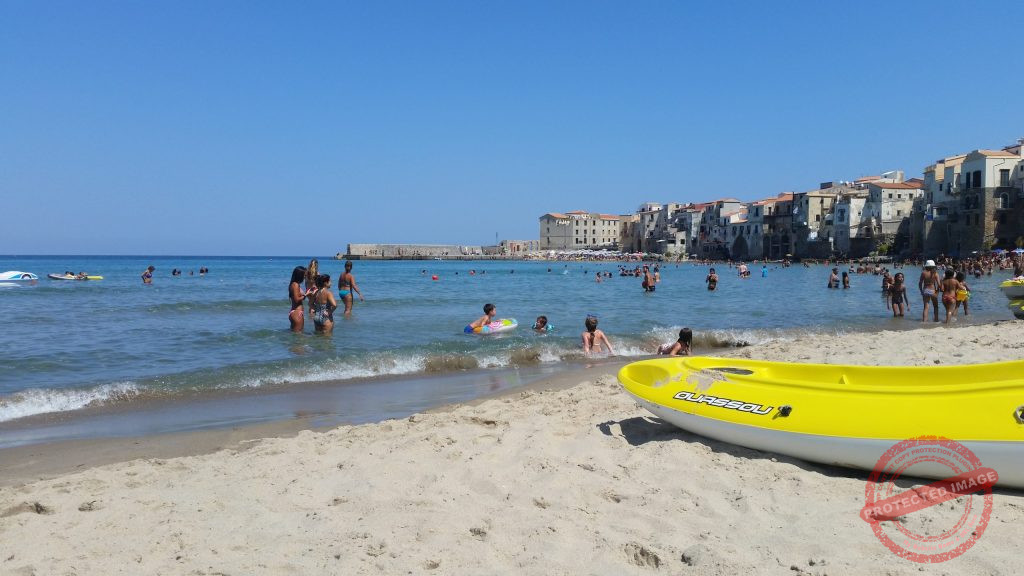
In Cefalù, you can swim in a golden, crescent bay while looking up at historic stone fishermen’s houses and the towering, UNESCO-listed 12th-century Norman cathedral. It is a striking blend of medieval architecture and Mediterranean beach life.
Further west along the southern coast lies the blindingly beautiful Scala dei Turchi (Stair of the Turks). This is not your typical sandy beach; it is a monumental, undulating staircase of pure white marna—a soft limestone and clay rock formation carved by centuries of wind and sea waves. The contrast between the brilliant white stone under the hot sun and the emerald-blue sea below is surreal.
If you want to dodge the crowds entirely, head southwest to Sciacca. Famous for its hand-painted ceramics and natural thermal springs, its beaches—like Spiaggia di San Marco—feature wide, unpretentious stretches of golden sand framed by yellow clay cliffs, where you can watch the sunset over the Mediterranean in absolute, uninterrupted peace.
6. The Isolated Majesty: Sardinia’s Island Paradise
Sardinia is a continent itself. It is Italy’s absolute heavy hitter for pure, transparent, warm water and raw island topography, completely detached from the rhythms of the mainland.
Stintino, San Teodoro and Cala Goloritzé
Up in the extreme northwest, Stintino holds one of the most visually arresting shores in the world. Its crown jewel, La Pelosa, features water so shallow and impossibly translucent it feels like a salt-water swimming pool.
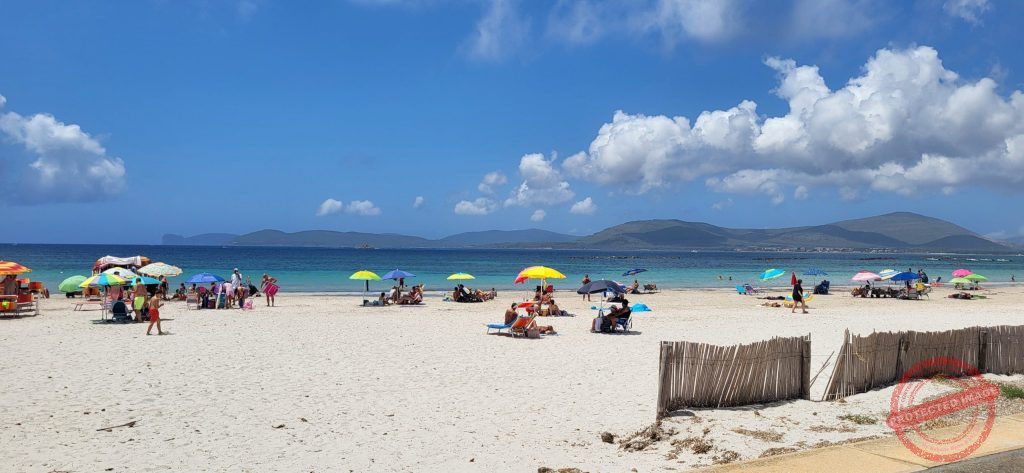
Insider Note: Access is highly regulated to preserve the delicate ecosystem, requiring pre-booked tickets and the mandatory use of straw mats under towels to prevent sand depletion. I would advise against it if you travel in August: it would only be an overcrowded, overwhelming experience. In this case, just go further down to Alghero.
On the northeastern coast, San Teodoro acts as a magnet for those chasing dramatic coastal plains. La Cinta is a majestic, sweeping ribbon of thin sand that separates the sparkling sea from a lagoon where pink flamingos routinely gather. Nearby, Cala Brandinchi is affectionately nicknamed “Little Tahiti” by locals—a shallow, dazzling turquoise haven where you can walk out for dozens of meters with the water barely reaching your knees.
Insider Note: Access for Cala Brandinchi is regulated and you have to reserve your spot in advance (reservations at this link). I highly advise against it if you are travelling during high season.
A hidden paradise in Sardinia is Cala Goloritzé. Famous for its surreal turquoise waters and the dramatic limestone pinnacle that rises majestically above the shore, this UNESCO-protected gem is truly a breathtaking beach in Italy. Accessible only by a scenic trek or by boat, it remains a pristine paradise.
Insider Note: Access is regulated, so plan in advance if you want to visit this beach.
If you want to enjoy the best of Sardinia, I am writing an article about my last holiday there. You can get insider ideas and tips from my itinerary, proved and approved! Stay tuned for my next article publication.
Finding Your Rhythm: A Quick Guide to Italy’s Diverse Coasts
| Coastline Style | Best Destinations | The Vibe | Perfect For |
| Wide, Shallow Sandbars | Lignano, Bibione, Caorle, Cervia, Lido di Savio | Multi-generational, easygoing, nostalgic | Families, long walks, wellness seekers |
| Island Perfection | Stintino, San Teodoro | Warm water, wild granite, ancient towers | Paradise seekers, snorkelers, luxury slow travelers |
| Dramatic Cliffs, Rocks & Coves | San Fruttuoso, Levanto, Cala Goloritzé, Spiaggia di Michelino, Scala dei Turchi | Raw, wild, visually spectacular | Hikers, divers, photography buffs, geology lovers |
| Historic Coastal Towns | Senigallia, Sestri Levante, Cefalù, Vieste | Cultured, vibrant, food-focused | Foodies, romantics, history lovers |
| Untamed Eco-Reserves & Wild Shores | Sabaudia, Baratti, Punta Aderci, Roccella Ionica | Windswept, spacious, natural wonders | Slow travelers, nature lovers, solitude seekers |
The perfect beach in Italy isn’t a single destination you copy out of a luxury magazine. It’s a feeling. It’s finding that specific stretch of sand where the espresso is simply called “caffè” (want to blend in with the right Italian word? Read my essential vocabulary here), the seafood was caught five minutes ago, and the sea belongs entirely to the moment.