Visiting Naples during Easter weekend means immersing yourself in a city where sacred rituals constantly blend with the vibrant life of the alleyways. While other art cities might be defined by a single spectacular event, Easter in Naples is a layered journey made of devotion, evocative processions, and a gastronomic culture that is unparalleled in Italy.
Table of Contents
The ritual of “STRUSCIO”: from 18th-century etiquette to modern promenade
In Naples, the Easter weekend truly comes alive on Holy Thursday with the ancient ritual known as “lo struscio”. This age-old tradition involves the adoration of the Holy Sepulchre of Christ and requires the faithful to visit at least seven major churches in their city. At each church, they recite the Gloria, the Hail Mary, and the Our Father, seeking the Lord’s blessing. While the churches to visit are not fixed, the pilgrimage must always conclude at the Church of San Francesco di Paola.
The term “struscio” in Neapolitan culture has long referred to the simple act of strolling, but to understand the origins of this intriguing word, we must turn to local legend and travel back to 18th-century Naples, during the Bourbon era. It is said that, in those days of mourning for Christ’s Passion, a royal decree strictly forbade the movement of carriages and horses through the city’s streets as a sign of respect for the Virgin’s sorrow.
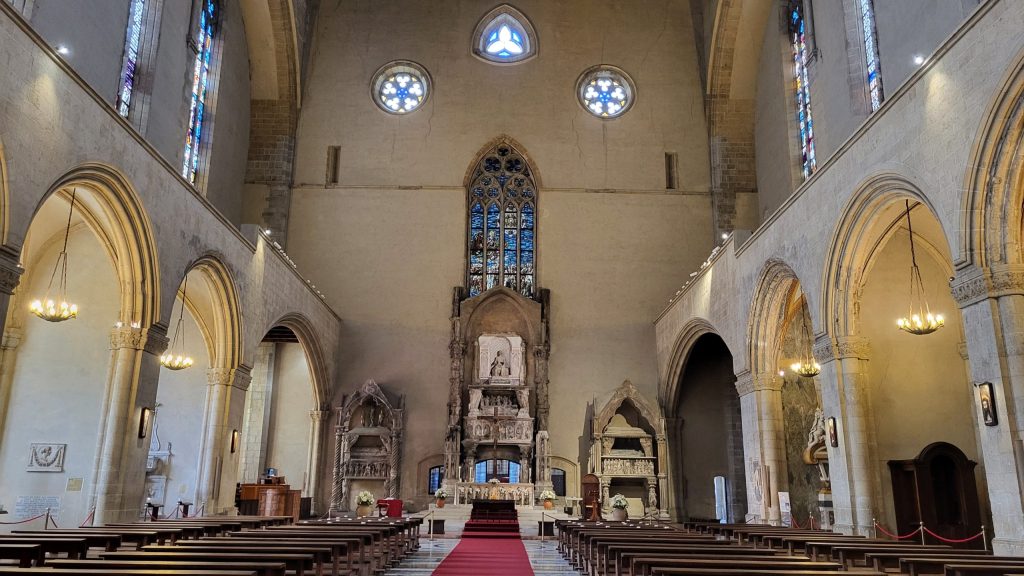
This ban transformed Via Toledo into a stage for the nobility and upper bourgeoisie: unable to display their carriages, Neapolitan aristocrats began pouring onto the main street on foot to perform their ritual visits to the “Sepolcri” (the altars of repose) in the city’s churches, ultimately ending at the Church of San Francesco di Paola in what is now Piazza del Plebiscito. The term “struscio” (literally “rub” or “shuffle”) actually derives from the rustling sound produced by the fine, heavy fabrics of women’s garments—silks, brocades, and velvets—that, brushing against one another in the slow movement of the crowd, created a distinctive and constant noise.
More broadly, the term “struscio” was used to describe the sound of shoes scuffing the ground or the rustling of passersby’s clothing. We mustn’t forget that Easter in Naples was an opportunity to see and be seen, to show off one’s finest attire, and to turn a religious obligation into a worldly social event.
Today, though the carriage ban has been replaced by modern pedestrian zones, “lo struscio” remains a deeply rooted tradition. On Holy Thursday, Neapolitans still flood the route from Via Chiaia to Via Toledo in droves. They no longer walk at the leisurely pace dictated by 18th-century fashions, but the spirit is the same: it is the city’s ritual stroll, a moment of collective participation that precedes the solemnity of Good Friday.
The processions and cult of Good friday
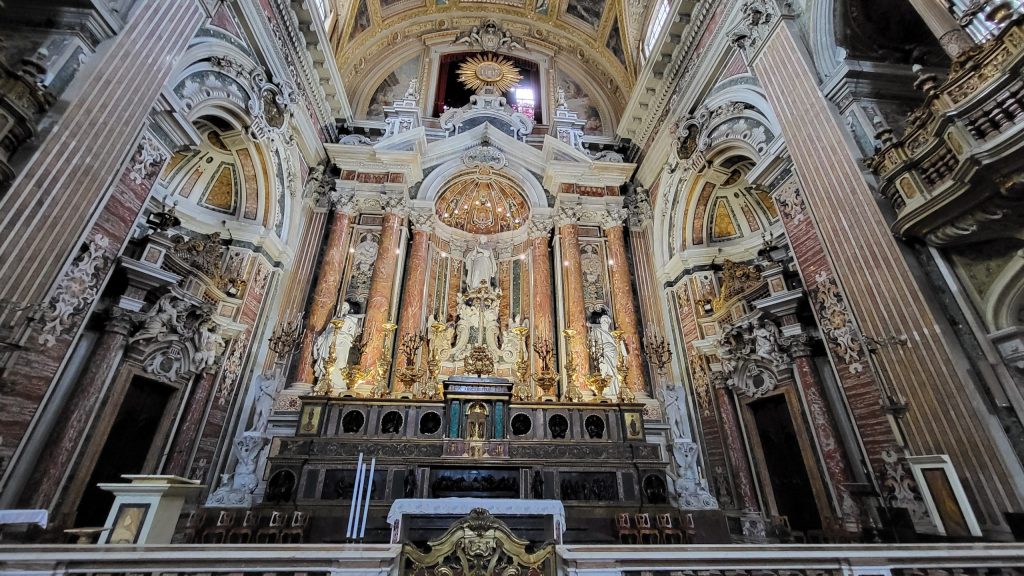
Good Friday is a day of silence and processions. One of the most evocative winds through the streets of Capodimonte, or the famous Procession of the Mysteries on the nearby island of Procida. In the city, the churches of the historic center, such as the Gesù Nuovo or the Santa Chiara complex, become destinations for a continuous pilgrimage. It is a moment when the city slows down and the atmosphere becomes charged with a palpable emotion, far from the chaotic image often associated with Naples—ideal for those who want to observe the more intimate side of Neapolitan devotion.
Easter in Naples: Casatiello and Pastiera
In Naples, food is an extension of faith and Easter symbolism, and the tables during these days tell stories of history and legend.
- Casatiello: This is the king of the savory table. It is a leavened bread rich in lard (sugna), cracklings (ciccioli), cheese, and salami. Its ring shape recalls the crown of thorns, while the whole eggs placed on the surface, held in place by crosses of dough, symbolize life reborn.
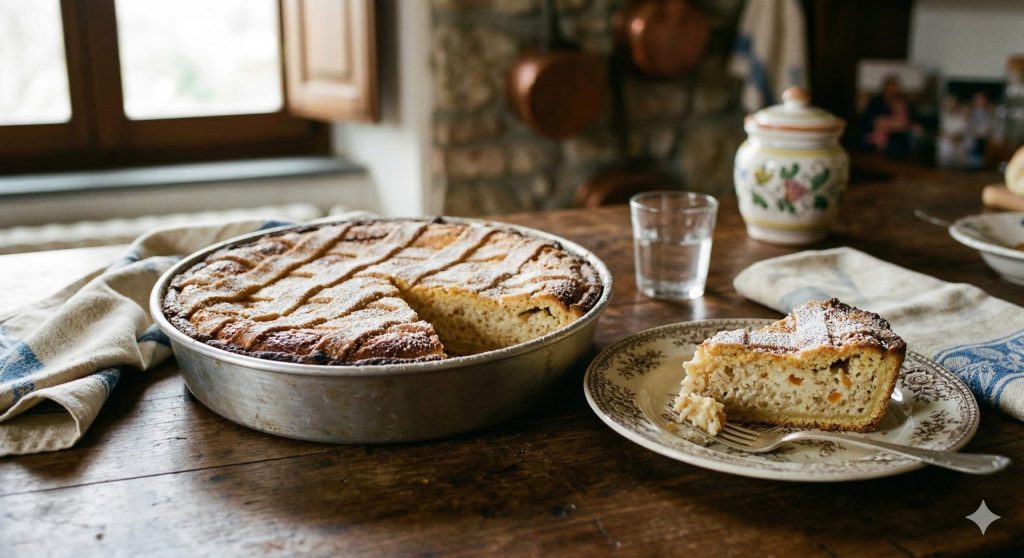
- Pastiera: The ultimate dessert of the Resurrection. Legend says the siren Parthenope received gifts of ricotta, wheat, eggs, and orange blossom water from the inhabitants of the gulf, returning them in the form of this cake. In reality, the recipe was perfected over centuries by the nuns of the San Gregorio Armeno convent, who were famous for distilling the essence of orange blossoms from their own gardens.
Easter in Naples: practical information and logistics
Naples attracts many visitors during Easter, and managing your movements requires a few logistical precautions:
- Move around on foot: The historic center must be explored strictly on foot. Wear comfortable shoes because the “basoli” (the large volcanic paving stones) can be slippery or uneven.
- The Subway of Art: To move between the Vomero district and the center, use Line 1. The Toledo station is worth a stop even if you don’t need to catch a train: its light installations make it one of the most beautiful stations in Europe.
- Museum Reservations: If you plan to visit the Sansevero Chapel to see the Veiled Christ, don’t forget that it is essential to book months in advance on the official website, especially for the weekend of April 5th, 2026.
Easter in Naples beyond the center: the Capodimonte museum
For those seeking a break from the density of the alleyways, I recommend heading up to the Capodimonte Museum and Royal Park. This Bourbon palace houses one of the most important art galleries in Italy, featuring works by Caravaggio and Titian. The wide avenues of the surrounding park offer a perfect breath of fresh air for a relaxing afternoon before diving back into the energy of the city center.
Easter in Naples: why choosing this city?
Experiencing Easter in Naples is an experience that involves all the senses, from the chants of the processions to the scent of orange blossom water that fills the streets. It is a city that reveals itself to those who know how to respect its pace and its thousand-year-old rites. If you wish to discover Naples in total autonomy, exploring the lesser-known neighborhoods and the stories hidden behind every corner, take a look at my Do-it-yourself Naples guide for itineraries designed to help you experience the city like a true local expert.